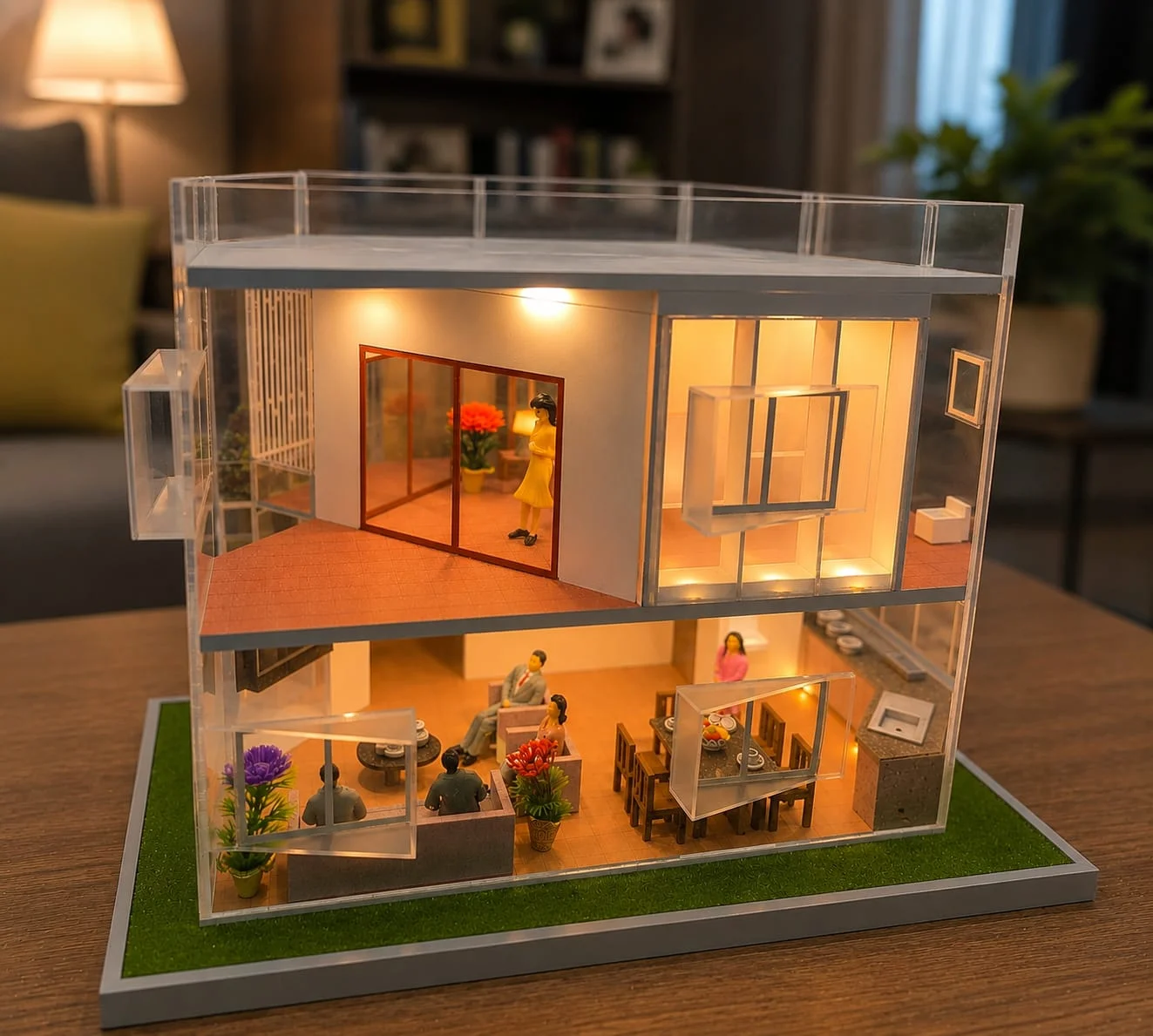
The craft of building physical architectural models has quietly evolved a great deal over the past decade, even though the finished pieces still look, at first glance, similar to what studios were producing years ago. Behind the scenes, though, a lot has changed in materials, technology and client expectations. Looking closely at where a good 3d architectural model india is headed says a lot about where the broader design and real estate industries are headed too.
Faster Turnaround Through Better Digital Workflows
As mentioned, most studios now work from digital drawings straight through to laser cutting and 3D printing, but the tooling itself has gotten noticeably faster and more affordable over the last several years. What once took a studio a month can now often be delivered in half that time without sacrificing quality, simply because the machines involved have become more capable and more accessible to smaller studios, not just large operations.
Sustainable and Reusable Materials Are Gaining Ground
Clients, particularly larger developers with public sustainability commitments, are increasingly asking about the environmental footprint of their marketing materials, including physical models. This has pushed some studios toward recyclable acrylics, reduced-waste cutting techniques, and modular designs that allow parts of a model to be reused or reconfigured for future projects rather than discarded after a single exhibition.
Interactive and Hybrid Digital-Physical Models
One of the more interesting developments is the rise of hybrid models that combine a physical base with digital projection or app-based augmented reality overlays. A buyer can point a tablet at a physical township model and see additional information layered on top, unit availability, sun path studies, or a walkthrough triggered from a specific building. This blends the trust-building physicality of a real model with the flexibility of digital content that can be updated without rebuilding anything.
Rising Expectations Around Detail and Realism
As renders and digital visualisation have become more photorealistic, client expectations for physical models have risen alongside them. Buyers and investors who are used to seeing hyper-detailed renders now expect a similar level of realism in the physical piece, which has pushed studios to invest more in fine detailing, realistic landscaping, and accurate material representation than was typical a decade ago.
Growing Demand Beyond Metro Cities
As real estate development and infrastructure projects expand into tier-two and tier-three cities across India, demand for professional model-making has followed. Developers in smaller cities are increasingly competing for the same investor and buyer attention as those in major metros, and a well-built model has become part of matching that standard, even outside the traditional metro-heavy client base studios served in the past.
What This Means for Anyone Commissioning a Model Today
For clients evaluating a 3d architectural model india today, these shifts translate into practical benefits, faster turnaround, more material options, and increasingly the possibility of interactive features that weren’t affordable or available even five years ago. It’s worth asking any studio you’re considering whether they’ve adopted these newer capabilities, since a team still working entirely with older manual techniques may struggle to match the turnaround and detail level that has become achievable elsewhere in the industry.
At the same time, it’s worth remembering that new technology is a tool, not a guarantee of quality on its own. A studio with the latest 3D printers but a weak eye for proportion and finishing will still produce a mediocre model. The technology explains why the industry can move faster and do more today, but the craftsmanship, the actual judgement calls about scale, colour, texture and composition, remains the real differentiator between studios.
Looking Ahead
It’s reasonable to expect this evolution to continue rather than plateau. As materials science advances and 3D printing becomes even more precise and affordable, the gap between what’s achievable at large architectural scale and fine miniature scale will likely keep narrowing, giving clients more flexibility to combine both in a single commission. Augmented reality integration, still a novelty for most studios today, is likely to become a standard offering within the next few years as the underlying technology matures and clients grow more comfortable requesting it.
For developers, architects and exhibition organisers planning ahead, staying loosely aware of these trends, even without needing to understand the technical details, helps in having more informed conversations with the studios they hire and in setting realistic expectations for what a model built today should be capable of compared to one built a few years ago.
Choosing a Partner Who Keeps Pace With the Industry
Given how much has changed in a relatively short time, it’s worth explicitly asking a prospective studio how their process has evolved over the past few years. A team that can speak specifically about new materials, tools or techniques they’ve adopted, rather than describing their process in the same general terms they might have used a decade ago, is more likely to be genuinely keeping pace with the industry rather than coasting on past reputation.
This doesn’t mean the newest studio in the market is automatically the best choice, experience still counts for a great deal in a craft this dependent on judgement and finesse. But a studio that combines real experience with a genuine willingness to adopt better tools and methods as they become available tends to be the safest long-term bet for anyone planning to commission models regularly in the years ahead, since they’re less likely to fall behind competitors who are investing in newer capabilities while still delivering the craftsmanship fundamentals that haven’t changed.
Conclusion
None of these shifts have replaced the fundamentals of the craft, patience, precision and a genuine eye for proportion still matter as much as ever in every 3d architectural model india project. But the tools, materials and client expectations around this work continue to move forward, and studios that keep pace with these changes are the ones consistently winning the more demanding, higher-value projects.