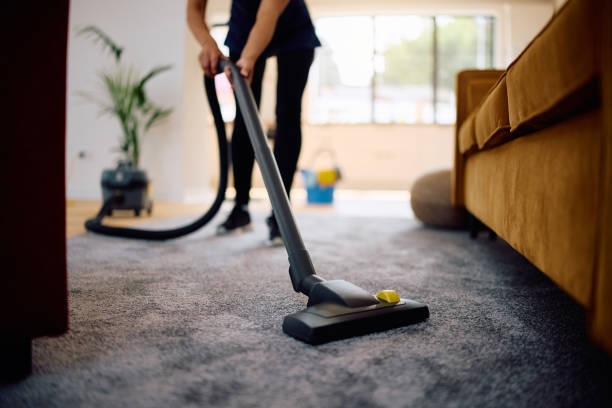
Carpet is one of those things nobody thinks about until it looks bad. It sits underfoot in offices, waiting rooms, hotel lobbies and retail spaces across the city, quietly absorbing dirt, moisture and wear until suddenly it looks tired, stained and well past its best. By the time most businesses call for help, they’re usually looking at a much bigger job than if they’d kept on top of it from the start.
Why Carpet Wears Out Faster Than People Expect
Foot traffic is the obvious culprit, but it’s not the only thing shortening a carpet’s lifespan. Fine grit and dust act almost like sandpaper on carpet fibres every time someone walks across them, gradually cutting away at the material at a microscopic level. Add in spilled coffee, dropped food, and whatever gets tracked in from outside, and it’s easy to see why carpet in a busy commercial space ages faster than most people expect.
Sydney’s climate adds its own complications. Humidity swings between seasons can affect how carpet retains moisture, and a build-up of dampness in high-traffic areas creates ideal conditions for mould and unpleasant odours if it isn’t addressed properly.
The Case for Regular Maintenance Over Annual Deep Cleans
A common pattern in commercial settings is letting carpet go for the better part of a year, then booking one intensive deep clean and hoping it resets everything. The problem is that by the time visible staining and odour show up, dirt has usually worked its way deep into the fibres and backing, which makes it far harder to fully restore compared to carpet that’s been maintained consistently along the way.
Regular vacuuming combined with periodic professional cleaning – rather than one big annual event – keeps grit from grinding away at fibres over time and catches spills and stains before they set in permanently. It’s a bit like dental care: consistent small maintenance beats waiting for a crisis and hoping a single intensive visit fixes everything.
What Professional Cleaning Actually Achieves
Standard vacuuming removes surface debris, but it doesn’t touch what’s embedded deeper in the pile. Professional hot water extraction, often called steam cleaning, uses heated water and cleaning solution injected into the carpet under pressure, then extracted along with the loosened dirt. Done properly, it lifts out grime that regular vacuuming simply can’t reach, without leaving the carpet so saturated that it takes days to dry and risks mould growth in the meantime.
Businesses looking into professional carpet cleaning Sydney providers offer should ask specifically about drying times and equipment used, since faster-drying methods matter a lot in commercial settings where a space can’t simply be closed off for a full day while carpet dries out.
Stains That Need Special Attention
Not every mark responds to a standard cleaning pass. Coffee, wine and certain inks can bond with carpet fibres in ways that need targeted spot treatment rather than a general clean across the whole floor. The timing matters too – a spill treated within the hour comes out far more easily than one that’s been ground into foot traffic for a week before anyone gets around to it. Training staff to flag spills immediately, rather than waiting for the next scheduled clean, makes a genuine difference to long-term carpet condition.
Protecting the Investment
Commercial carpet isn’t cheap to replace, and doing so disrupts a business for days at minimum. Entrance matting that captures grit before it ever reaches the main carpet, rearranging furniture periodically to even out wear patterns, and addressing spills immediately are all low-cost habits that meaningfully extend a carpet’s usable life. None of it replaces professional cleaning, but it reduces how hard that cleaning has to work each time.
Setting a Realistic Schedule
How often professional cleaning is needed really depends on foot traffic. A busy reception area or retail floor might benefit from cleaning every few months, while a quieter back office could reasonably stretch to twice a year. A good provider will actually look at the space and traffic patterns rather than pushing the same blanket schedule on every client regardless of how the carpet is actually used.
Carpet Type Changes the Approach
Not all commercial carpet responds the same way to cleaning. Looped pile carpet common in office settings behaves differently under hot water extraction than the denser cut-pile carpet often found in hotel lobbies and boardrooms, and using the wrong technique or product on the wrong carpet type can cause pile distortion or discolouration that’s difficult to reverse. A provider who asks about carpet type and age before recommending a method is generally more trustworthy than one offering a single standard process for every job regardless of what’s underfoot.
Older carpet nearing the end of its practical lifespan also needs a gentler approach, since aggressive cleaning methods that work well on newer, more resilient fibres can sometimes accelerate wear on carpet that’s already fragile. Matching the cleaning method to the carpet’s actual condition, rather than defaulting to the most intensive option available, tends to get better results without unnecessary risk.
Final Thoughts
Carpet that looks tired and worn earlier than it should almost always comes down to a maintenance gap rather than a failure of the carpet itself. Businesses that build regular cleaning into their routine, rather than waiting until the problem is visible to everyone walking through the door, consistently get more life and a better appearance out of the same investment. It’s a small operational habit with a genuinely outsized payoff.